

The published Baiyun Express itinerary begins and ends in Guangzhou and covers northern and southern Xinjiang over 18 days. A moving base may reduce some full hotel check-ins and suitcase repacking compared with a road tour that changes hotels frequently. It does not remove coach transfers, long road legs, hotel stays or the need to board vehicles.
The journey is not a continuous train ride. Some attractions are reached by road, private vehicle or scenic-area shuttle, and the chosen route affects which stops appear. The Kanas boardwalk and the stone-paved lanes of Kashgar Old City introduce real uneven-surface walking; exact distances, gradients, steps and rest opportunities need date-specific confirmation.
This guide turns the question into a trip-by-trip checklist: how to compare the 18-day rhythm with your everyday stamina, what cabin and bathroom specifications do and do not tell you, how to plan for boarding and road transfers, and what to ask about the Pamir. No age threshold or universal fitness verdict can replace an individual assessment.
What does an 18-day Xinjiang journey actually involve?
The published Baiyun Express Xinjiang program is an 18-day Guangzhou round trip across northern and southern Xinjiang, with a Pamir-area road section. It is a multi-part itinerary rather than eighteen identical days aboard a train. Travelers should assess the whole sequence, including transfers and sightseeing, instead of judging suitability from the train journey alone.
The public itinerary includes route choices, and the selected northern and Ili-to-Kuqa options affect which destinations appear. It also labels different transport modes, including the touring train, road transfers, private vehicles and scenic-area shuttles. A place listed as a destination is not automatically reached directly by rail or from a station platform.
For a traveler managing fatigue, the useful question is how movement and rest are distributed on the exact departure. Ask for the current day-by-day itinerary, planned transport for each excursion, approximate time in vehicles, walking segments and overnight locations. A broad route summary cannot supply those details, and a previous edition may not match the date being considered.
The trip length also matters because small demands can accumulate. A short walk after a long transfer may feel different from the same walk after a quiet morning. A meal stop, sightseeing window or vehicle handoff may add standing or waiting that is not visible in a destination list. Ask the operator to describe the sequence in practical terms.
Start with a simple comparison to an ordinary week at home. Consider how you manage several outings, unfamiliar surfaces, vehicle entry and a full day away from your usual support. This comparison is not a medical test; it helps identify questions for your physician and the operator before you commit to a long itinerary. The sequence matters more than a label such as gentle, relaxed or senior-friendly.
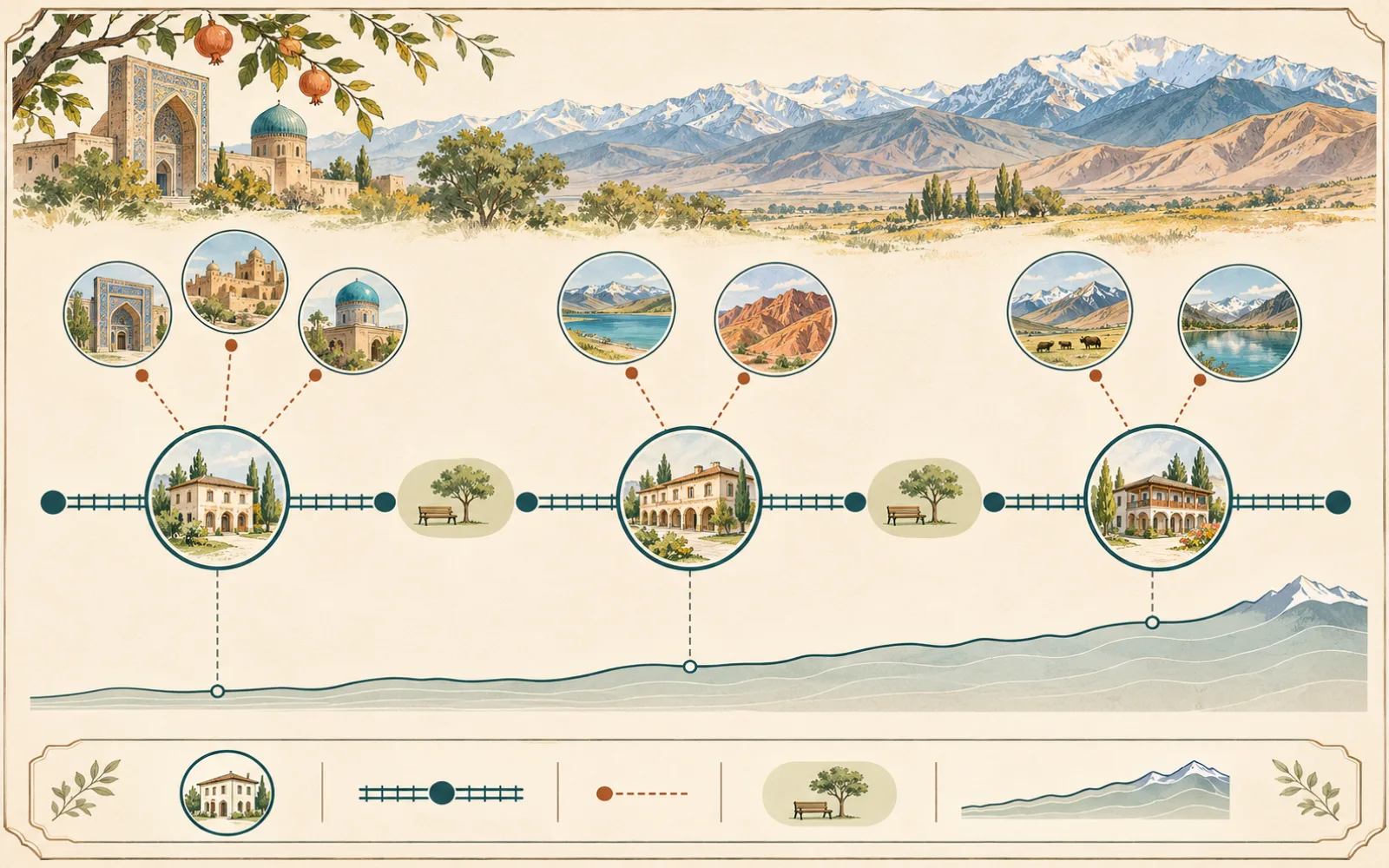
Can a moving base make the hotel routine easier?
Compared with a road tour that changes hotels frequently, a train used as a moving base may reduce some full check-in, checkout and suitcase-repacking cycles. That can simplify one part of travel logistics for some guests. It is a possibility, not a promise that the entire trip uses one room or has no lodging changes.
The itinerary includes train travel and off-train arrangements. Guests may still need to leave the train, board a coach or other vehicle, and stay at a hotel on some parts of the route. The number and location of those stays depend on the selected itinerary and operating plan, so do not infer an overnight schedule from the route overview.
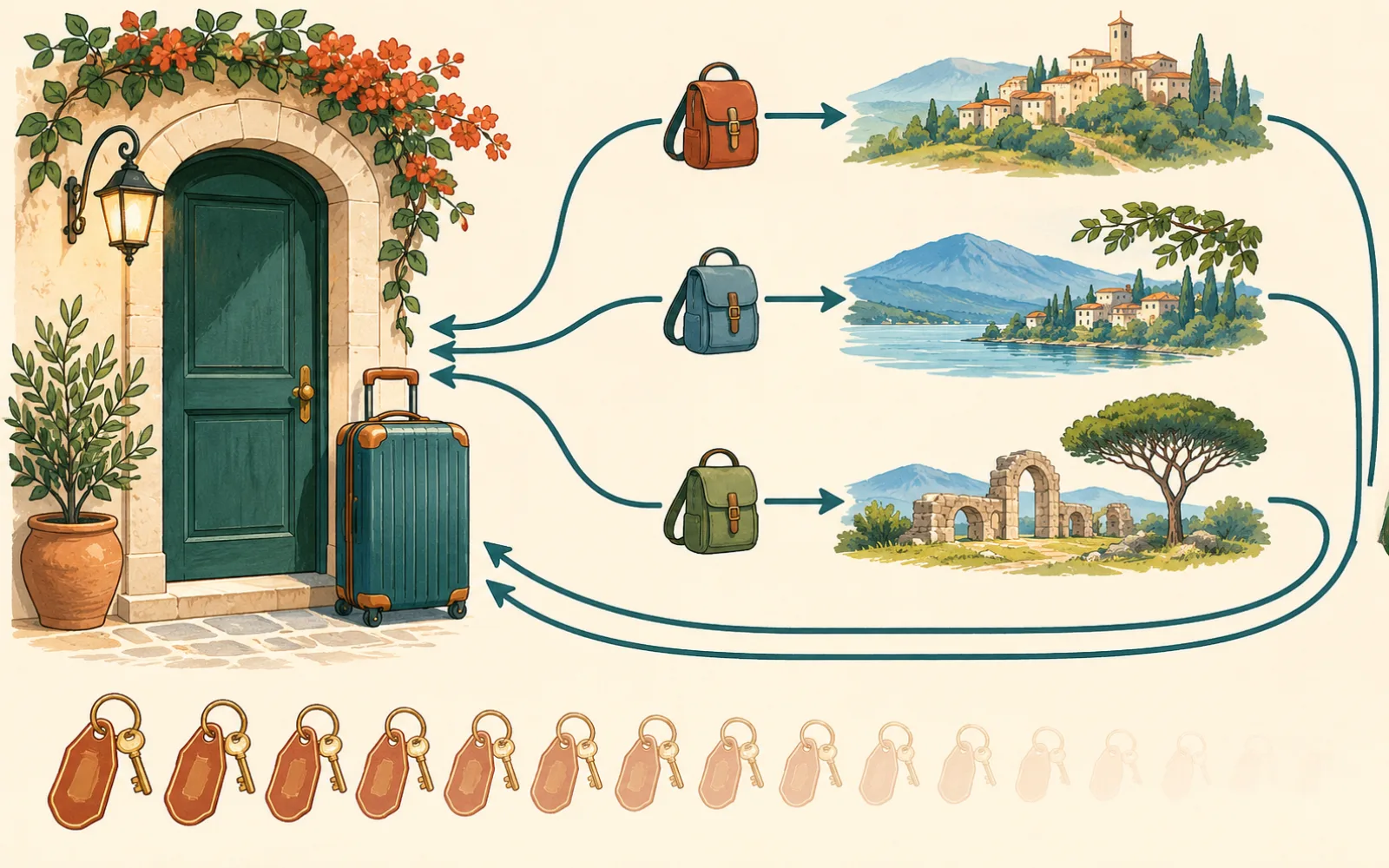
Ask which items need to be carried on excursion days and whether larger luggage remains in a room, moves with the group or is handled under a separate arrangement. Also ask where guests rejoin the train after sightseeing. These are practical questions for the dated plan, not details to guess from the fact that the train continues moving.
A moving base may help someone who finds repeated hotel check-ins tiring, yet it does not remove walking between vehicles, station platforms, hotel entrances or attractions. Suitcases can also be harder to manage on uneven ground than a small day bag. A companion may be able to assist, but no luggage service should be assumed unless confirmed.
When comparing travel styles, count the tasks that matter to you: changing rooms, lifting or wheeling a suitcase, entering a bus, waiting while others board, and returning after an outing. Ask the operator which tasks are included or supported. This keeps the comparison grounded in your needs rather than a broad claim that rail travel is effortless. Whether this reduces effort depends on the actual luggage plan and what the traveler can manage.
How should you judge the pace across active and quieter days?
A useful pace review separates rail time, road time, walking and time on your feet. The itinerary's day cards identify transport and destinations, but they do not guarantee the duration or effort of each activity. Ask how much time is expected in a vehicle, how long guests may stand or walk, and where the group can pause.
A day with a scenic stop can include several transitions: leaving a room, reaching a vehicle, walking from a drop-off point and returning later. Each transition can require balance and attention, even when the distance is not long. If repeated short walks are harder than one continuous walk, tell the operator and ask whether the day can accommodate that pattern.
Look for the rhythm across consecutive days, not only the hardest attraction. A demanding surface after a long road transfer may be more important than the same surface on a lower-effort day. Ask whether the schedule provides seated breaks, whether the vehicle remains available nearby, and what happens if one traveler needs to stop before the group.
Do not assume that a scheduled visit can be shortened, skipped or completed at a different pace without affecting transport or group arrangements. Ask what choices are actually available for your departure. If the answer is not settled, request a written note of what is known and what remains dependent on local access or operating conditions.
Compare the proposed pattern with activities you already manage, while allowing for heat, unfamiliar surroundings and travel fatigue. Your personal physician can help assess the health side of that comparison. The operator can explain the route and logistics. Neither a destination list nor a general fitness label answers both questions by itself. A written schedule should distinguish confirmed timing from estimates and local contingencies.

What do cabin size and an en-suite bathroom tell you?
The published cabin specifications provide useful comparisons, but they answer only a few questions. Yunqi Lanyue is listed at 14 m² across six suites, while Yunqi Yayun is listed at 10.2 m² across 40 rooms. Both categories are described with an en-suite bathroom. These figures do not establish accessible clearances or a particular room assignment.
An area measurement does not show the width of a doorway, the turning space beside a bed, the height of a step, or the arrangement of bathroom fixtures. If any of those details affects safe movement, request the specific measurement or a current layout for the room category and departure under consideration. Do not treat the larger figure as proof of suitability.
The table compares published category-level information with the questions that remain open. It is a planning aid, not an inspection record. The room configuration, assigned location, availability and final booking terms need written confirmation for the selected departure. If a detail is essential, put it in the request instead of relying on a general room description.
A private bathroom can reduce the need to walk to a shared facility at night, which may matter to some travelers. It does not tell you whether the entrance is level, whether grab bars are present, how much space is available beside the toilet, or whether a walker can be positioned safely. Those are separate questions.
Ask for room-specific facts in a format you can review with a companion or clinician: doorway and bathroom dimensions, bed configuration, any threshold, the route from the cabin to shared areas, and the location that can be assigned. If a requested measurement is unavailable, decide whether you can travel without it before paying or signing. Compare room facts directly with the physical tasks you need to complete.
| Cabin category | Published area and count | Bathroom | What to verify for your needs |
|---|---|---|---|
| Yunqi Lanyue | 14 m²; 6 suites | En-suite bathroom listed | Doorway, threshold, fixture layout, bed clearance and assigned location |
| Yunqi Yayun | 10.2 m²; 40 rooms | En-suite bathroom listed | Doorway, threshold, fixture layout, bed clearance and assigned location |

How can you check whether the cabin bathroom routine will work?
Both listed Baiyun Express cabin categories have an en-suite bathroom, but the published fact is not a full accessibility specification. A traveler who needs to transfer, hold a support rail, turn a mobility aid or use a particular seat needs details about the actual layout. Ask for dimensions and features rather than assuming the word private means step-free.
Think through the routine from the bed to the bathroom and back. Consider whether you need space to turn, a place to steady yourself, room for another person to assist, or a specific fixture height. These are individual needs, so a general image or category area cannot show whether the arrangement will work for you.
The public product information lists a bathroom for each room type, while room-level details such as doorway width, threshold height, grab bars and accessible transfer space are not established here. Ask which features are confirmed for the cabin category and which can be verified only after assignment. If the answer is uncertain, record that uncertainty before booking.
A bathroom used during a moving journey may also feel different from one in a hotel because the train can be in motion. Do not assume that this creates a particular safety condition, but raise it if movement affects your balance or routine. Your physician or therapist can advise on your personal situation; the operator can provide the physical layout.
If you travel with a companion, agree in advance what assistance they can realistically provide and what should remain private. Ask whether the cabin arrangement gives enough room for that plan. Do not rely on onboard staff to provide personal care unless the provider has explicitly confirmed a service and its scope in writing. A bathroom feature is not a substitute for measurements relevant to safe movement.

What should you ask about platforms, train steps and vehicles?
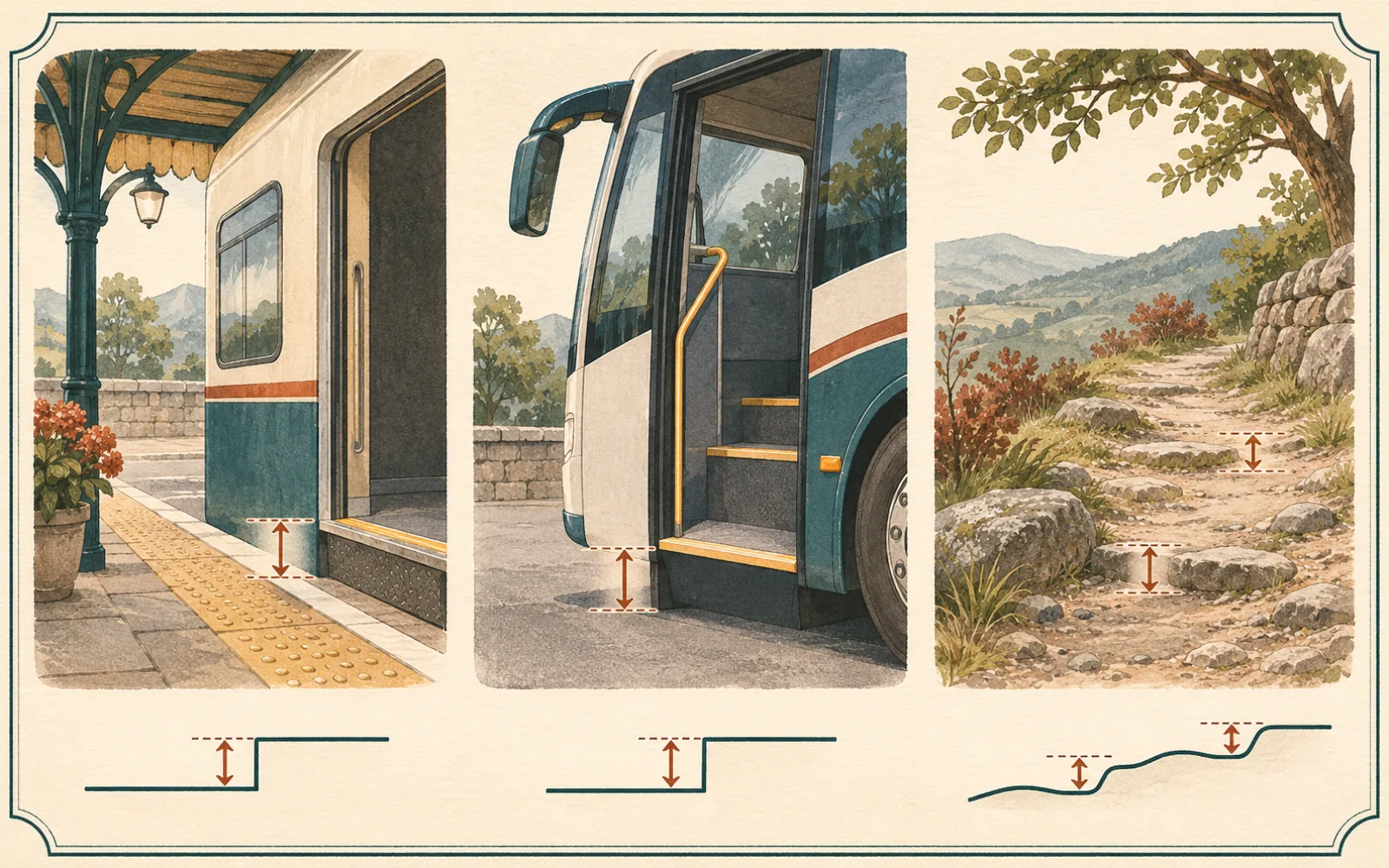
Boarding conditions can change by station and by the train entrance being used. A platform may have steps or a height difference, and the distance between the platform and carriage doorway needs to be confirmed for each station. No station-wide step-free boarding arrangement or lift should be assumed from the published itinerary.
Ask for the departure station's boarding route, the platform surface, any stair or ramp section, the train-entry height and whether staff can assist with the specific movement you need. Also ask how the process works at any later reboarding point. A general promise to help is less useful than a description of the actual transition.
Road transfers bring another set of entry heights. Coaches, private vehicles and off-road vehicles can differ, and the itinerary may use more than one type. If lifting a foot onto a high step, lowering yourself into a seat or standing on uneven ground is difficult, request the planned vehicle class and the step or handhold details where available.
Clarify luggage and companion roles during boarding as well. Ask who handles larger bags, whether the traveler must step aboard while carrying anything, and how much time is allowed before the vehicle leaves. Do not assume that a companion can enter first and assist from inside, because the arrangement may depend on the station or operator.
Describe the movement rather than using only the word accessible. For example, explain whether you need a handrail, a lower step, time to board slowly, or a seat near the vehicle door. Ask the operator to confirm which parts can be arranged and which cannot. Then compare the written answer with your own physical needs. Also confirm the time allowed for boarding and changing vehicles.
What does the Kanas wooden boardwalk require?
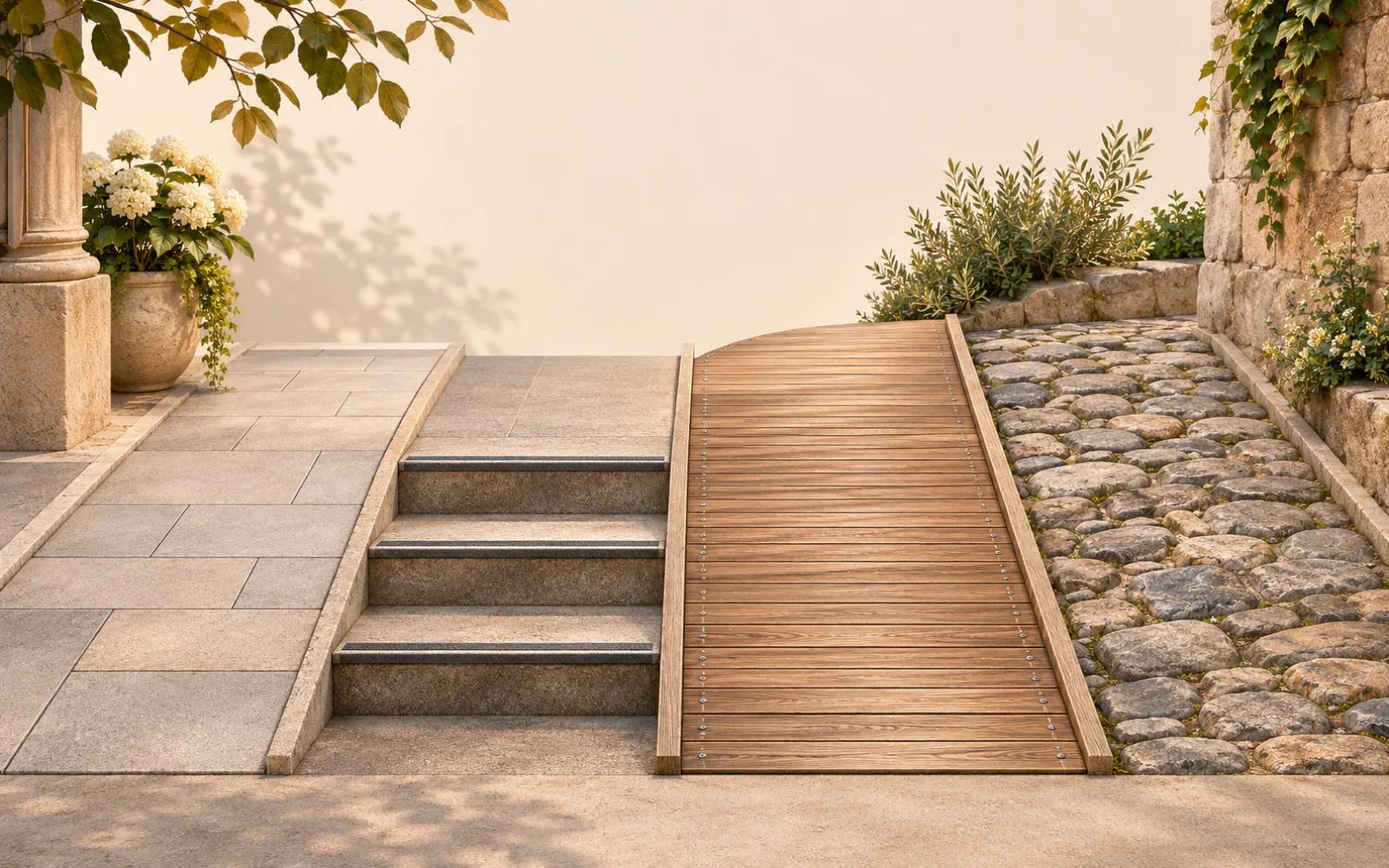
A Kanas visit that includes the wooden boardwalk involves walking on a built path rather than viewing the landscape only from a vehicle. That still requires standing, forward movement and steady foot placement over the duration of the visit. The route name alone does not tell a traveler how long the walk will be or how the surface changes.
Before booking, ask which boardwalk section is planned for the selected departure, the estimated distance in each direction, the elevation change, any steps, the expected pace and where a traveler can pause. Ask whether a shuttle or return option is available if someone cannot complete the full walk. Do not infer these details from a map or photograph.
Wooden paths can have joints and changes in texture, but the condition and design of the actual route must be checked for the date. Ask whether the walkway is level, whether rails are present, and how weather could affect footing. These are questions for the operator to answer with current local information, not guaranteed properties of every boardwalk.
A traveler who can walk on a level indoor surface may still find an unfamiliar outdoor path more demanding. The difference may involve time on the feet, balance, crowding, surface changes or the ability to rest. Discuss the proposed route with your clinician if any of those factors interacts with a health or mobility condition.
If the boardwalk is a priority, decide what the minimum acceptable visit looks like before asking for a route adjustment. For example, you may need the nearest confirmed viewpoint, a shorter walk, a companion, or an option to remain with a vehicle. Ask whether that option exists on your departure and obtain the answer in writing. A boardwalk label alone cannot establish duration, slope, crowding or seating.

How should you plan for stone-paved lanes in Kashgar Old City?
Kashgar Old City's stone-paved lanes create a real walking and footing demand. A traveler may need to walk over paved surfaces rather than being delivered to every doorway by vehicle. The exact lane, visit sequence, distance and time on foot should be checked against the selected departure's current itinerary.
Stone paving can feel different from a smooth hotel corridor because the surface is unfamiliar and may vary from one stretch to another. Do not assume that every lane is uneven or that a specific number of steps is present. Ask the operator to identify the planned route, any slopes or stairs, and where the group can pause or return to a vehicle.
Questions about walking should be specific. Ask for the estimated distance, whether the outing includes standing in one place, how long the group may remain on foot, the expected pace and whether guests may shorten the visit. If these points depend on local access, ask when the final answer will be available and who will confirm it.
For a traveler with balance concerns, footwear and a companion can help with planning but do not remove the underlying surface demand. A walking aid may also need to be suitable for the actual route. Discuss its use with your clinician and ask the operator whether it can be carried in the planned vehicle and managed at the attraction.
Do not use another visitor's account as a substitute for current route details. A review may describe a different season, itinerary or walking segment. Use it only to generate questions. The dated written plan should state the current route and transport, while your own physician helps assess whether that level of movement is appropriate for you. Paving is a surface fact; exact access conditions still require confirmation.
How can you compare walking effort with available pauses?
Walking distance is only one part of effort. A short route can still involve waiting while standing, crossing a vehicle threshold or moving over a surface that requires concentration. A longer route may be manageable if there are places to sit, but those places and the timing of breaks must be confirmed rather than assumed.
Ask the operator to describe four elements for each important outing: time walking, approximate distance, changes in level and the nearest practical place to pause. Add the vehicle location and how the group returns if someone stops. If the itinerary does not have these details yet, ask which items are estimates and which will be confirmed later.
Consider how fatigue develops for you. Some people can manage one longer walk but struggle with several shorter walks separated by transfers; others need frequent rests from the beginning. Think about a normal day in your current routine, then discuss the difference between that and an unfamiliar full-day excursion with your clinician.
Rest options may also be group-dependent. A stop may be brief, a vehicle may move to another point, or the group may need to continue to keep the schedule. Ask whether a traveler can wait in a safe location, whether a companion must stay with them and how the group reconnects. Avoid relying on a verbal assumption.
Write a simple effort plan with one column for movement and another for recovery. Include vehicle steps, walking surfaces, standing time and seated breaks. This does not need to predict every minute. It gives your physician and travel companion a clearer picture and helps the operator answer whether the planned day can meet your needs. Separate physical effort from how quickly the group is expected to move.
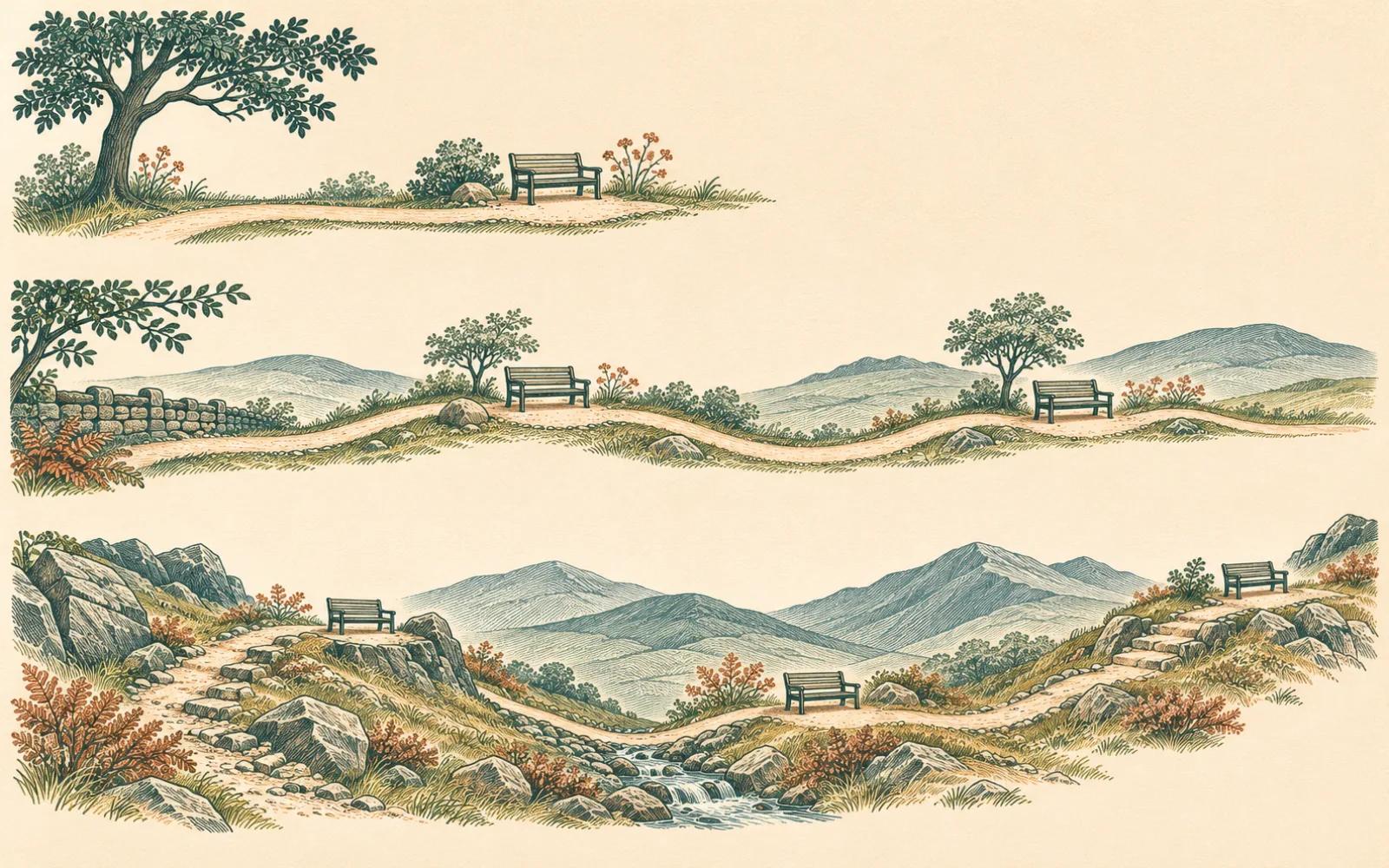
Why is the Pamir road section a separate planning question?
Some Pamir road segments may reach roughly 3,000 to 3,500 metres. The exact stops, time at elevation and route conditions vary by departure and operating circumstances, so the range is a broad planning reference rather than a day-by-day elevation schedule or a promise of a particular stop.
Ask for the dated route profile with the planned road points, estimated elevations, time spent at each higher location, walking demands and overnight locations. A single maximum figure leaves important context unanswered. Driving through a place, stopping briefly and staying overnight are different patterns, and the written plan should distinguish them where that information is available.
Discuss the proposed exposure with your own physician, especially if you have a history of heart or lung disease or another condition your clinician considers relevant. This guide cannot determine whether the route is suitable for you. Do not use a general elevation range to decide that every traveler is either safe to go or should not travel.
Keep the altitude discussion separate from the train's onboard support. Yunhu · Anyu is described as a duty station for the accompanying doctor and storage for basic medical supplies. That description does not establish a hospital, intensive care, continuous cabin care, guaranteed response time, train-wide oxygen or a pressurized carriage.
Ask what the departure-specific escalation plan is if someone becomes unwell away from the train, and which local services may be relevant along that route. Availability and access can vary with location and operating conditions. Request written answers that your clinician can review, and make your booking decision only after you understand the limits. Use the range to ask for exact route details, not to predict a response.

What should you discuss with your physician before booking?
Bring your physician the actual travel information, not only the phrase 18-day luxury train tour. Share the expected walking surfaces, vehicle transfers, long travel periods, cabin bathroom questions and the Pamir road range. The clinician who knows your history can assess how those conditions relate to your health and whether further evaluation is needed.
If you have a heart or lung condition, a recent illness, a mobility limitation, a medical device or a medication routine that could be affected by travel, describe it clearly to your physician. Do not use this page to change medication, choose a dose or decide on treatment. Ask your clinician what information they need from the operator.
A useful conversation covers stamina over several consecutive travel days, ability to manage steps and vehicle entry, balance on wood and stone surfaces, and what support you may need. Ask whether your physician wants a route profile or estimated time at higher elevations before giving advice. Do not treat a general clearance as a guarantee about every excursion.
The operator and the physician answer different questions. The operator can provide itinerary, route, room, boarding and support details. Your clinician can interpret the personal health implications. A medical decision cannot be based on the cabin size, a marketing description, the presence of an accompanying doctor or another traveler's experience.
Keep a brief written list of your questions and your physician's guidance. If the itinerary changes after that discussion, check whether the change affects walking, time in a vehicle or exposure to elevation. A new detail may warrant another conversation with your clinician before you decide to continue with the booking. Provide context about current abilities, not only a list of diagnoses.

What should you confirm in writing before paying?
Before booking, ask whether any health declaration or medical document is required for your selected departure. If a document is needed, ask exactly what information it must contain, who reviews it, how to submit it, when it is due and whether the requirement differs by route or traveler. Do not assume there is one universal process.
Request the current day-by-day itinerary and written details for walking distances, estimated time on foot, gradients, steps, rest options, transfers and overnight locations. Ask which route elements are confirmed and which remain subject to local access, railway operation, weather or other notices. If a detail is not yet available, ask when it will be confirmed.
For boarding, request the station-to-train sequence and the relevant height or step information for each station where it can be supplied. For road transport, ask what vehicle types are planned and whether the group may use a different class. A response should be specific to the movement you need, not simply a broad statement that assistance is available.
For the cabin, confirm the category, current availability, assigned-room process and any bathroom, doorway or bed measurements that affect you. For medical support, ask for the stated scope of Yunhu · Anyu and the off-train escalation plan. Availability, final price, route, transfers, lodging and contract terms remain subject to written confirmation.
Save the answers together with the quote and dated itinerary. If a phone conversation resolves an important question, ask for the same answer by email or another written channel. Review the final documents against the needs you identified with your physician and companion before paying a deposit or signing a contract. Keep unanswered items visible in your decision notes.
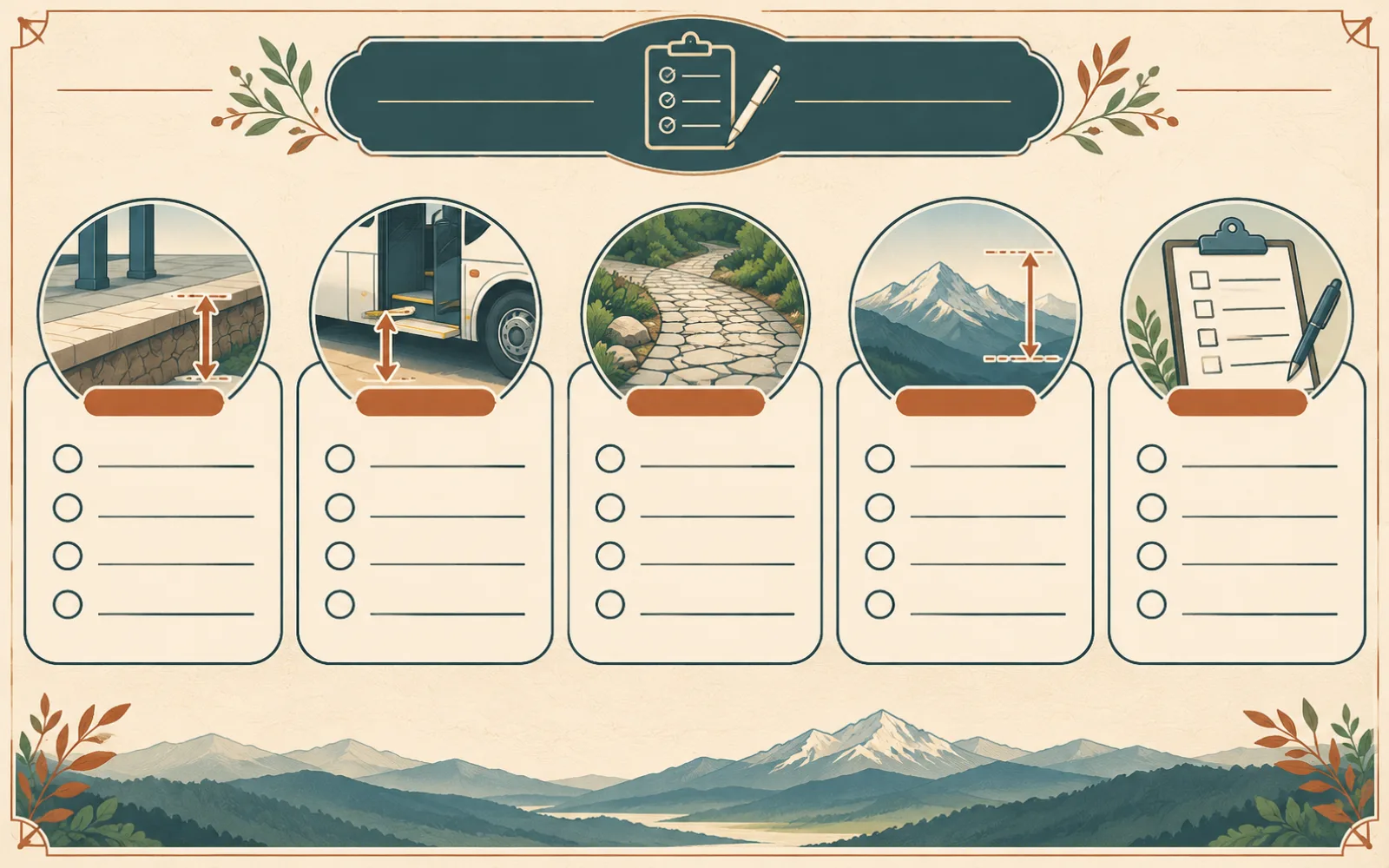
How should a companion plan support without assuming care?
A traveling companion can help with decisions, pacing, luggage and communication, but the plan should match what that person can actually do. Do not assume the operator supplies a personal attendant or that the accompanying doctor provides continuous individual care. Ask for the confirmed service scope and keep personal-care responsibilities explicit.
Before departure, agree which tasks the companion can manage: carrying a day bag, helping with vehicle entry, staying with someone who pauses, or keeping track of written route details. Some tasks may require training, physical strength or time that a companion does not have. Discuss those needs honestly rather than leaving them to an unfamiliar setting.
Ask how the group handles a split if one traveler cannot continue an outing. Can the companion remain with that traveler? Where would they wait, how would they return, and does the rest of the party continue? Those answers depend on the route and vehicle plan. Do not assume that one person can leave the group without affecting transport.
A companion should know the traveler's preferred way to ask for a break, what information the physician wants shared, and which emergency contacts or documents should be easy to find. Keep that information private and carry only what the traveler has agreed to share. This is preparation between companions, not a promise of onboard staffing.
If several relatives are traveling together, do not assume all of them can provide assistance at every transition. Check who will accompany the senior traveler during walks, transfers and room routines. A clear plan can prevent confusion, but it cannot make a route accessible if its physical demands exceed what the traveler can manage. Agree how the companion will communicate a need for a pause.

How can you make a personal fit decision without using age limits?
Do not use age as a pass-or-fail rule. Two travelers of the same age can have very different stamina, balance, health and comfort with long vehicle days. A more useful decision combines personal health advice with the actual walking, transfers, room details and high-altitude road exposure on the selected itinerary.
Begin with the activities you know you can manage today. Note how long you can walk on an uneven surface, whether you need a handrail for steps, how you feel after a long seated journey and whether you can recover for another outing the next day. These observations inform questions; they do not replace a clinician's assessment.
Next, compare those needs with written route information. If the operator can confirm distance, surface, transfer height and rest options, review each against your own limits. If an essential fact is unavailable, treat it as an unresolved item rather than a reassuring assumption. Decide whether you are comfortable booking while it remains unknown.
A conditional decision can be sensible. You might be ready to proceed after your physician reviews the Pamir route and the operator confirms the transfer details. You might also decide that a specific walking segment, vehicle entry or bathroom arrangement is not workable for you. Neither choice needs to be presented as a rule for other travelers.
Keep the final decision tied to the exact departure, room category and current itinerary. If any of those change, revisit the questions. A past successful trip, a general description of the tour or a published room area cannot guarantee that the same conditions apply to a different date or traveler. Note which unanswered item would change your decision and request that answer first.

What can you prepare for unfamiliar walking surfaces?
Footwear is one part of a surface plan, not a substitute for route information. Choose shoes you have already used comfortably and discuss any support needs with your clinician or relevant specialist. Do not rely on brand-new footwear, a particular tread or a walking aid to make an unconfirmed route safe.
Ask whether the planned Kanas boardwalk and Kashgar Old City visit include surface transitions, slopes, steps or areas where the group may need to stand. Confirm how the route changes if weather or local access affects the surface. The operator should provide current information for the selected date where it is available.
If you use a cane, walker or other mobility aid, ask whether it can be carried in the planned vehicles and whether the actual paths can accommodate it. A device that works on a hotel floor may not work the same way on a boardwalk or stone paving. Review these conditions with the person who understands your mobility needs.
Pack only the items you can manage during transitions, and ask where larger luggage will be stored or transferred. A small bag may reduce what you carry, but it does not answer the question of vehicle access or walking distance. Confirm the luggage arrangement and any assistance before treating the transfer as manageable.
Before departure, put the dated itinerary, written answers, physician guidance and companion plan in one place. Recheck them if the route changes. That preparation does not guarantee that every access condition will match the plan, but it gives you a clear basis for deciding whether to proceed and for asking about a change promptly. Repeat this review whenever route or access information changes.

Frequently asked questions
Is an 18-day Xinjiang train journey automatically unsuitable for older travelers?
No. Age alone does not establish whether the trip is suitable. Walking stamina, balance, steps, vehicle transfers, health history and the Pamir road section all matter. Review the exact itinerary with your own physician and obtain written answers about movement and access before making a booking decision.
Does the train mean there are no hotel changes or long road transfers?
No. A moving train base may reduce some full check-in and repacking cycles compared with a road tour that changes hotels frequently, but the route still includes off-train travel and lodging arrangements. Ask for the selected departure's dated overnight plan, vehicle transfers and luggage handling in writing.
How much walking is required at Kanas and Kashgar Old City?
The Kanas wooden boardwalk and Kashgar Old City's stone-paved lanes involve real walking, but the exact distance, gradient, steps, pace and rest points vary by route and date. Request those details for your departure. Do not infer a walking distance from a destination name or another traveler's account.
Are station platforms and train entrances step-free?
That is not established as a universal feature. A platform may have steps, and the height difference between a platform and train entrance should be confirmed for each station. Ask for the boarding route, any assistance available and the relevant measurements for the exact departure before booking.
Do the private bathrooms make the cabins wheelchair-accessible?
No such conclusion follows from the published description. Both Yunqi Lanyue and Yunqi Yayun list an en-suite bathroom, but the room area and bathroom feature do not prove wheelchair clearance, step-free access or specific fixtures. Request the measurements and layout you need, and proceed only if they meet your requirements.
What should I know about the Pamir road altitude?
Some Pamir road segments may reach roughly 3,000 to 3,500 metres, while exact stops, time at elevation and route conditions vary. Ask for the dated route profile and discuss it with your own physician, especially if you have a heart or lung condition. This range cannot determine suitability by itself.
Does every traveler need to submit a health declaration or medical file?
No universal requirement is stated here. Before booking, ask Danny Dong Yi whether a health declaration or medical document is required for your selected departure, what it must contain, who reviews it, how to submit it and when it is due. Obtain the answer in writing rather than assuming a standard process.
Can the accompanying doctor provide continuous personal care?
The published scope is narrower: Yunhu · Anyu is a duty station for the accompanying doctor and a place to store basic medical supplies. It is not described as a hospital, ICU or continuous cabin-care service. Ask for the actual onboard scope and off-train escalation plan in writing.