

A traveler going alone should separate two questions: whether a selected departure and room category can be confirmed for one occupant, and what the complete written price will be. The public fare is a comparison point for two people sharing, not a promise that one person can travel for that amount.
For a true single-occupancy request, ask the quote to show the whole train compartment for the onboard nights and single use of each included hotel room after disembarkation. Those are different cost lines, and neither has a published fixed supplement amount or percentage.
This guide uses the site’s 2027 Guangzhou round-trip Xinjiang program and its published room facts. Departure sales, current availability, room assignment, hotel nights, and final terms must all be confirmed in writing for the booking you are considering.
Can a Solo Traveler Book Baiyun Express?
A solo traveler can request a private-occupancy quotation for Baiyun Express, subject to written confirmation for the chosen 2027 departure and room category. The public site does not display a fixed solo total, so the first useful answer is not a percentage. It is a dated quote stating exactly what one person would occupy on the train and in hotels.
Traveling alone does not mean that the full departure becomes a private tour. A solo booking does not, by itself, make the itinerary private. Ask whether your booking is accepted as one named traveler, whether the quoted room is for your sole use, and which itinerary services are included for that date. Do not infer group size, host language, or personal assistance from the fact that you are traveling solo.
The train is operated by Panda Roam, with CTS as its strategic partner. Danny Dong Yi is the official international market adviser. A traveler should keep the identity of the operating company, the adviser’s role, and the contracting party clear in the written paperwork. The quote and final agreement should identify who is responsible for the specific booking and where payment is due.
A practical first message names the program, departure date, room category under consideration, route choices, and one-person occupancy request. Ask for a written total that separates the room basis from other components. If any point is still open, leave it marked as unconfirmed instead of treating a conversational estimate or a displayed reference fare as an accepted booking.
If a requirement cannot be priced yet, ask the adviser to mark it pending and state what written detail will close it.

What Does the Published Fare Actually Mean?
The displayed 2027 prices are per guest on a two-person share basis. They are useful for comparing the published room categories on the same date, but they are not a one-person package total, a cash price that locks a space, or a live inventory statement. A solo traveler should keep that basis attached whenever a figure is copied into a note or enquiry.
For the six May-to-August dates listed in the fare band, the reference price is CNY 98,880 per guest in Yunqi Yayun and CNY 118,880 per guest in Yunqi Lanyue. The September 14 Jinfeng Huajuan departure is listed at CNY 108,880 for Yayun and CNY 128,880 for Lanyue. These figures describe the published two-person basis, not the amount due from a sole occupant.
The date band must not be mistaken for daily departures. It groups named dates in the 2027 calendar. Four of those dates are currently assigned to government or private charter groups and are not sold to individual travelers. Only June 6, June 26, and September 14 are listed for individual sale. Even on those dates, a room and booking are not confirmed until the responsible party issues written confirmation.
A useful comparison note records the date, room name, public two-person reference fare, and the separate amount quoted for single occupancy. If the quote shows only one total, request its calculation. This makes it possible to distinguish the displayed baseline from the additional cost of occupying the full room alone, hotel treatment, route supplements, and any other confirmed inclusions.
A spreadsheet should label these as two-person reference amounts until a dated reply replaces them with a booking-specific solo quotation.
Which Costs Create a Single-Occupancy Quote?
A single-occupancy quote needs to identify at least two accommodation components separately: sole use of the full train compartment on the onboard nights, and single use of the included hotel room on the nights away from the train. A single supplement is therefore a booking-specific calculation across different suppliers and night counts, not a universal percentage that can safely be applied to the public fare.
Ask the adviser to state the number of nights covered by the train-room charge and the number of hotel nights priced for one person. If an overnight segment, transfer, or hotel is not included in the tour price, it should be identified as excluded or separately priced. Do not assume that every night on an 18-day itinerary is an onboard night or that every hotel night has the same room rate.
The quote should show the public two-person reference, the single-occupancy adjustment for the train, and the single-use hotel amount as distinct lines. If the operator calculates the total another way, ask for the components and their basis rather than insisting on a particular formula. Taxes, services, route selections, and other items should appear only when the written offer confirms them.
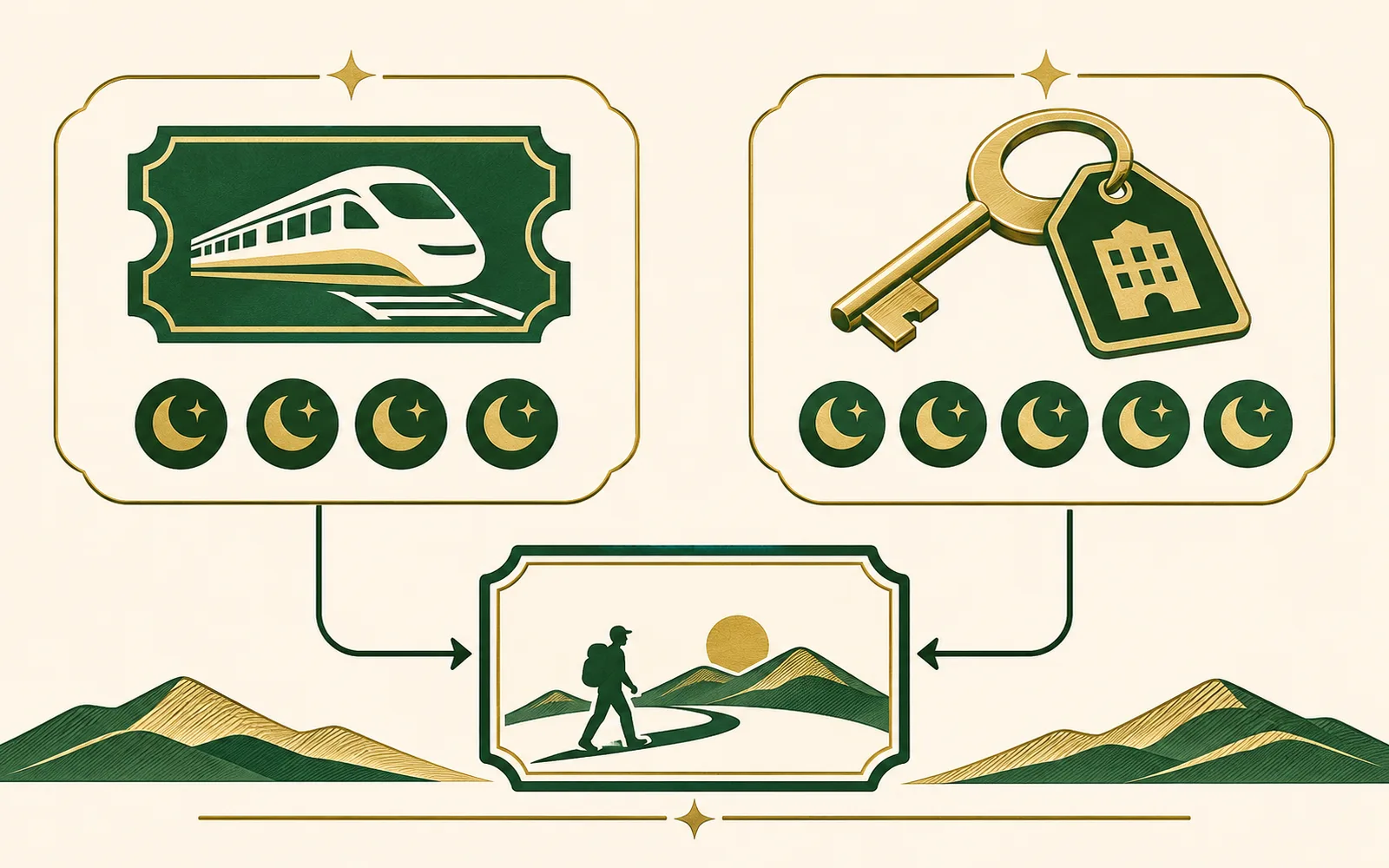
The generated visual below separates rail and hotel nights as a planning aid. It does not describe a product layout, a confirmed room allocation, or actual nightly prices. Its purpose is to help a traveler check that both types of accommodation appear in the written request and that the final answer names the nights to which each line applies.
A hotel already booked independently should be marked outside the package so its cost is not counted twice.
Twin Share vs. Private Cabin Occupancy
Twin share and single occupancy describe different price and room-use bases. On a two-person share booking, two travelers are counted against a room-category fare published per guest. On a single-occupancy booking, one traveler requests sole use of the full booked room, with the price for that use stated in a written quote. Neither basis should be inferred from a room photograph or a general cabin description.
The public page publishes no fixed single supplement. The table compares what a traveler should ask to see in each case; it does not promise that a particular room, bed setup, or date is available. A quote should name the room category and confirm how many people will occupy it, including the hotel arrangements away from the train.
A shared-room rate is not permission to assign an unknown person to a confirmed single-occupancy booking. If a traveler asks to share with a named companion, both travelers should receive the proposed occupancy basis and price in writing before payment. If the booking is confirmed for one person’s sole use, do not accept a later roommate assignment unless the traveler explicitly agrees and the contract is amended.
Use the matrix to keep room privacy, payment basis, and inventory status separate. If the quote uses terms such as “share,” “single,” or “private,” ask the adviser to define them for the train and the hotels individually. Clear wording prevents a low per-person reference price from being confused with the cost of reserving a whole room for one traveler.
| Booking field | Two-person share basis | Single occupancy request |
|---|---|---|
| Room use | Two guests share the booked room category. | One named traveler requests sole use of the full booked room. |
| Public price | Published reference fare is per guest on a two-person basis. | No fixed total or supplement is published; request a written amount. |
| Train nights | Confirm the room category and occupancy in the quote. | List sole use of the full compartment for the applicable onboard nights. |
| Hotel nights | Confirm whether included hotels are priced for shared use. | List each hotel night and room priced for single use. |
| Availability | A reference fare does not confirm an open room. | Date, room, total, and terms remain on request until written confirmation. |
Use the same occupancy wording in the quote and contract, including any agreed change to a companion booking.

Count Off-Train Hotel Nights Separately
The hotel part of a solo quote should state how many off-train nights are included and whether each room is priced for single use. The train-room charge and the hotel charge solve different questions. A traveler may have a private compartment on the rail portion while still sharing a hotel room under a group arrangement, unless the written quotation says the hotels are single occupancy too.
Ask for the hotel list or schedule tied to the selected departure, the number of nights at each property, the proposed room basis, and any nights that remain outside the package. If property names are not confirmed, the quote should say so. Avoid assuming that the published itinerary implies a specific hotel, a room upgrade, or a guaranteed single room at every stop.
A useful total separates included shared accommodation from the requested single-use hotel amount. It should also identify whether breakfast, transfers, city taxes, or other services are included only if the seller confirms them. Those details vary by arrangement, so do not calculate a complete single budget by multiplying a guessed nightly rate by the number of travel days.
Check the resulting night count against the itinerary rather than the trip length alone. If the answer covers fewer hotel nights than expected, ask which nights are excluded and how they are handled. If it covers more, request the dated itinerary line that explains the difference. Resolve those gaps before comparing another departure or paying a deposit.
A traveler extending the stay before or after the tour should request extra nights separately instead of assuming the package rate applies.

Compare Lanyue and Yayun by Published Facts
The published room areas are 14 m² for Yunqi Lanyue and 10.2 m² for Yunqi Yayun, and both categories are listed with an en-suite bathroom. The train overview gives 18 carriages and a full capacity of 92 guests. Its room breakdown lists six Lanyue suites and 40 Yayun rooms, which together account for the stated capacity when two guests occupy each room.
Those numbers help a solo traveler decide which category to ask about, but they do not show current inventory or a guaranteed assignment. A larger area is a measurable difference, not proof that a room is more comfortable for every person. The published total does not establish doorway width, bathroom clearances, furniture positions, storage capacity, or any specific accessibility feature.
Ask the adviser to confirm the exact room category offered for your date, the occupancy accepted, and whether the room is for sole use. If a bed setup matters, ask for its current written description. If a measurement affects your decision, name the exact measurement needed and request a written answer tied to that category rather than relying on an illustrative image.
The visual compares area only as an abstract size concept. It is not a scale drawing or floor plan. Product photographs and design renderings can help identify a category, but an image should not be treated as proof of a final room configuration, bathroom dimensions, condition, or assignment. Use the written room information for published features and the booking confirmation for your own reservation.
Request each measurement you need in writing and keep the response attached to the room category and travel date it describes.

Check Personal Fit Before Choosing a Room
Room selection is easier when a traveler describes the need rather than asking which category is “best.” One person may value more published floor area; another may care about a particular bed arrangement, storage access, privacy, or an en-suite bathroom. Begin with the feature that affects your daily use, then ask whether the published description or a written measurement answers it.
Yunqi Lanyue is listed at 14 m² and Yunqi Yayun at 10.2 m². Both are described as having an en-suite bathroom. Those facts support a first comparison, but they do not establish that either category meets a specific mobility, medical-device, or personal-care requirement. If such a need applies, describe the exact movement or equipment requirement and request relevant measurements in writing.
A single traveler may value sole use for privacy, a stable place for belongings, or a quieter personal routine. These are preferences to discuss, not service promises. Ask whether the quoted room is reserved for your use throughout the train portion and whether the off-train hotel rooms use the same occupancy basis. A clear reply should say what is included and what still depends on availability.
Keep a short decision note with three columns: the published fact, the personal requirement, and the confirmation still needed. For example, an en-suite bathroom is a published feature, while its dimensions may remain open. This method prevents marketing language or an illustration from filling a gap that only the assigned room information can answer.
Label a preference as optional; if it is essential, ask for express written acceptance before paying.

Use the Current 2027 Departure Sales State Correctly
As of 25 November 2026, the 18-day Guangzhou round-trip Xinjiang program lists seven 2027 dates. June 6, June 26, and September 14 are open for individual sale. May 18, July 16, August 5, and August 24 are government or private charter departures and are not sold to individual travelers. A charter date should not be described as a public departure that is merely sold out.
The May-to-August reference fare band still appears in product information, but that pricing does not make every date in the band available to an individual. On the four charter dates, the quoted public reference is not an invitation to book a place. The June 6 and June 26 dates are the individual-sale dates in that band; September 14 is the separate autumn departure and fare pair.
An “on sale” label is not a room-level inventory feed. For a date listed for individual sale, ask whether the requested room category and single occupancy can be accepted now. The written reply should identify the departure date, the room category, and the current terms. If your preferred category cannot be confirmed, ask what alternatives are actually available instead of inferring that another date has space.
Keep the distinction visible when comparing dates: chartered and not open to individual travelers; listed for individual sale; and individually confirmed by a dated written response. These are three different states. A product page or earlier message can help frame a question, but the final status for the purchase decision is the status confirmed for your booking.
Sales status may change after this update date, so reconfirm it with room-level availability before payment.

Confirm Your Route Selection Before Pricing
The published journey is an 18-day Guangzhou round trip through northern and southern Xinjiang, with route selections that affect the itinerary. Ask the adviser to name the chosen northern route and the chosen Ili-to-Kuqa route in the quotation. Do not assume that two route names can be combined within one segment or that a prior departure used the same routing.
The product information lists a CNY 6,000 per-person supplement for Ili-to-Kuqa Route C. Treat that as a published route supplement, not as the price of single occupancy. Ask for it to appear on its own line if Route C is selected, and request confirmation of how it applies to the exact departure and occupancy basis in your written quote.
A traveler comparing a standard route with Route C should hold other choices constant: departure date, room category, one-person occupancy, and hotel arrangement. Otherwise, a difference in total may reflect several changes at once. The quote should say whether the CNY 6,000 amount is per guest or otherwise recalculated for the booking, and should identify the same currency and scope for every compared option.
The graphic is a generic route-choice metaphor, not a map of Xinjiang or a confirmed operating path. Use the current itinerary and the dated route description as the source for named stops and sequence. If rail operations, weather, or local instructions alter the plan, the written itinerary for your departure governs. Keep any revised route and related price change with the booking record.
Do not carry the CNY 6,000 figure to another route or product without a quote naming the matching selection.

Send a Complete Solo-Travel Quote Request
A complete request reduces the chance that a reply prices the wrong departure or occupancy. State that you are one named traveler seeking sole use, then identify the 18-day Xinjiang program, preferred date, first-choice room category, and route choices. Include an alternative date only if you are willing to consider it; a flexible request should not be mistaken for permission to substitute dates without your approval.
Ask for the published two-person reference fare and the single-occupancy total to be shown separately. Request a breakdown for sole use of the whole train compartment, each off-train hotel room, the number of nights in each category, and any route supplement. If the operator has not confirmed a component, ask for it to be marked pending rather than folded into an assumed total.
Include the traveler's full name as it should appear in booking correspondence, the number of people, contact email, and any essential room requirement. Do not send passport details or sensitive payment data in an initial message unless the official booking process requests them through an appropriate channel. Ask which contracting party will issue the formal itinerary, payment instructions, and agreement.
The image is a visual reminder to organize the questions, not an official form. A concise request can be written as ordinary email: identify the trip, date, room, route, one-person occupancy, and unresolved requirements; then ask for a current written quotation with its validity period. Save the reply and the date received so any revised version can be compared accurately.
- Program, departure, chosen routes, and room category.
- One named traveler and a sole-use request.
- Full train-compartment charge and covered onboard nights.
- Each single-use hotel night, total night count, and exclusions.
- Two-person reference fare and solo total shown separately.
- Currency, quote date, validity period, and pending conditions.
- Current availability state and contracting party.
Ask the adviser to state how long the quote remains open and whether a room is held during that period.
Check the Quote Line by Line
A useful quote makes it possible to reconstruct the total without guessing. Check that it names the selected 2027 departure, room category, guest count, single-occupancy basis, and route. Confirm that the train-room charge covers sole use of the full compartment for the stated onboard nights, and that the hotel line covers the stated number of single-use nights away from the train.
Compare each amount with its basis. A per-guest public fare, a room total, and a per-night hotel charge are not interchangeable. Ask which items are already included in the base reference, which are added for sole use, and which remain optional or excluded. If Route C appears, verify the listed CNY 6,000 per-person supplement is identified separately for the selected option.
Check the currency, quote date, validity period, and the party responsible for the offer. A quotation that lacks an expiry date is not automatically valid indefinitely. If a fee changes between versions, ask for a revised quotation with the reason and effective date. Keep the previous version for comparison, but make clear which document replaces it.
Look for an explicit statement about availability and confirmation. A quote can describe an amount while a room or date is still unconfirmed. Ask the seller to say whether the train room, hotel room, selected route, and departure have all been accepted for your booking, or to list each pending item. Do not treat silence in a price sheet as approval of a requested condition.
Compare each revision with the earlier copy and clearly mark the superseded price before accepting the latest version.

Keep the Quote, Confirmation and Contract Distinct
An enquiry begins a conversation; a quotation records proposed prices and conditions; written booking confirmation states what has been accepted; and the formal contract sets the terms that govern the purchase. These steps may be delivered through related documents, but a traveler should not assume that one has replaced another unless the document says so. Keep the latest version of each item with its issue date.
Before accepting, compare the confirmation with the quotation: departure date, traveler name, room category, sole-use arrangement, onboard nights, hotel nights, route, total, and inclusions. Any difference that changes privacy, price, or travel arrangements should be corrected in writing before payment. Do not rely on a verbal assurance to resolve a material mismatch in the booking record.
The contract should identify the contracting party, the itinerary version, the amount and currency, the payment schedule, and the terms for changes, cancellation, refunds, and supplier substitutions. Ask where a specific term appears if it is described only in a message. If an answer is still pending, request an updated agreement or a written addendum that names the unresolved issue and the date it takes effect.
The diagram below is a process concept, not a promised response schedule. It shows why a traveler should move from a clear request to a line-item quotation, then to written confirmation and contract review before paying. It does not imply a guaranteed turnaround time or that any date, room, or supplier has already been secured.
If documents conflict, ask the contracting party for a corrected version instead of choosing the message that seems more favorable.

Review Payment, Changes and Cancellation Terms Before Paying
Before sending money, match the payment instruction to the signed booking documents. Confirm the amount, currency, deadline, recipient name, and whether the payment is a deposit or a later installment. The recipient and schedule should be stated by the responsible contracting party in writing. Do not pay an amount based only on a public reference price or a message that does not identify the booking.
Ask what happens if the traveler changes a date, room category, route, or occupancy basis. The agreement should explain whether a change is permitted, who must approve it, how any new cost is calculated, and whether a revised itinerary or contract will be issued. Do not assume that the single supplement remains unchanged if a hotel or departure changes.
Read the cancellation and refund terms for the exact payment and departure. Check the deadlines, deductions, supplier conditions, and the process for making a cancellation request. If a term refers to another policy, request that policy before accepting. Keep the signed version and proof of any payment together, and make sure the receipt names the correct contracting party and booking reference.
A verified written total is more useful than a verbal promise of a low starting amount. If the recipient, due date, or refund condition is unclear, pause and ask the official adviser for a corrected document. The visual is only a reminder to compare the written amount, timing, and payee; it is not a payment instruction, banking record, or guarantee of a refund.
Record the named recipient and payment reference from the agreement, then compare them with the instruction before transferring funds.

Keep Product Lines Separate and Contact the Official Adviser
The prices and departure facts in this guide belong to the 2027, 18-day Guangzhou-to-Xinjiang round trip. They do not apply to the 2026 Cloud Sanctuary journey, an 11-day Guangxi-and-Yunnan product listed from CNY 59,880, or to a tailored southern-China itinerary. Those products have separate routes, dates, inclusions, and quotation terms. Ask for a separate document if you want to compare them.
For the solo-occupancy request, contact Danny Dong Yi, the official international market adviser, at 20000dongyi@gmail.com or WhatsApp +86 189 8092 6126. Panda Roam operates Baiyun Express; CTS is its strategic partner. Keep those roles distinct when reviewing the entity named on a quote, contract, or payment instruction. If the named contracting party differs, ask the adviser to explain it in writing.
Send the exact date, room category, route, and one-person occupancy request in the first message. Ask the reply to separate train-compartment occupancy from hotel single-use nights, list the room and route availability state, and attach the current written itinerary and quotation. If you need an answer on a specific measurement or inclusion, name it directly rather than asking for a general assurance.
Save the response, its date, and any revised quote. A call can help clarify a question, but the final price, availability, occupancy, payment, and change terms should be recorded in the booking documents. This makes it easier to decide whether the total fits your budget and whether every condition that matters to your solo trip has actually been accepted.
Do not use Cloud Sanctuary or another product’s room price as a proxy for a Baiyun Express solo supplement.
Frequently Asked Questions
Does Baiyun Express publish a fixed single supplement?
No. The website publishes 2027 reference fares on a two-person share basis and does not publish a fixed single-room supplement amount or percentage. Request an on-request written quote that separately lists sole use of the whole train compartment and single-use hotel nights. The amount, availability, and conditions are subject to written confirmation for your departure.
Is CNY 98,880 the total for one person in Yunqi Yayun?
No. CNY 98,880 is a published per-guest reference fare on the two-person share basis for the May-to-August fare band. It is not a one-person total or a confirmed room. The September 14 reference is CNY 108,880 per guest. Ask for the single-occupancy total in writing.
Which 2027 dates are open to individual travelers?
As of 25 November 2026, June 6, June 26, and September 14 are listed for individual sale. May 18, July 16, August 5, and August 24 are government or private charter departures and are not sold to individual travelers. A listed sale date still requires written confirmation of the requested room and availability.
What must a single-occupancy quote include?
Ask for the train category and the charge for sole use of the full compartment on the onboard nights, plus the number and single-use price of off-train hotel nights. The quote should also name the departure, route, public two-person reference basis, any confirmed route supplement, currency, validity period, inclusions, and pending conditions.
Does every 18-day travel day mean a hotel night?
No. Trip duration alone does not establish how many nights are spent on the train, in hotels, or outside the included package. Ask for the dated itinerary or hotel schedule and have the quote list the nights covered by each accommodation line. Confirm any excluded or self-arranged night in writing.
Can I be assigned an unknown roommate after booking single occupancy?
A confirmed single-occupancy booking should identify one traveler’s sole use of the booked room. Do not accept an unknown roommate assignment unless you explicitly agree and the booking documents are amended. If you want to share with a named companion, confirm the occupancy and revised price in writing before payment.
Does Route C cost CNY 6,000 for a solo traveler?
The current product information lists CNY 6,000 per person for Ili-to-Kuqa Route C. That is a route supplement, not the single-occupancy charge. Ask for Route C and the train and hotel single-use components as separate lines, all tied to your departure and stated in the written quote.
Can the 2026 Cloud Sanctuary price be used for this trip?
No. Cloud Sanctuary is a separate 11-day Guangxi-and-Yunnan product listed from CNY 59,880 for 2026. Its dates, route, fare basis, and booking conditions are separate from the 2027 Xinjiang journey. Request a separate quotation if you want to compare it with Baiyun Express.