
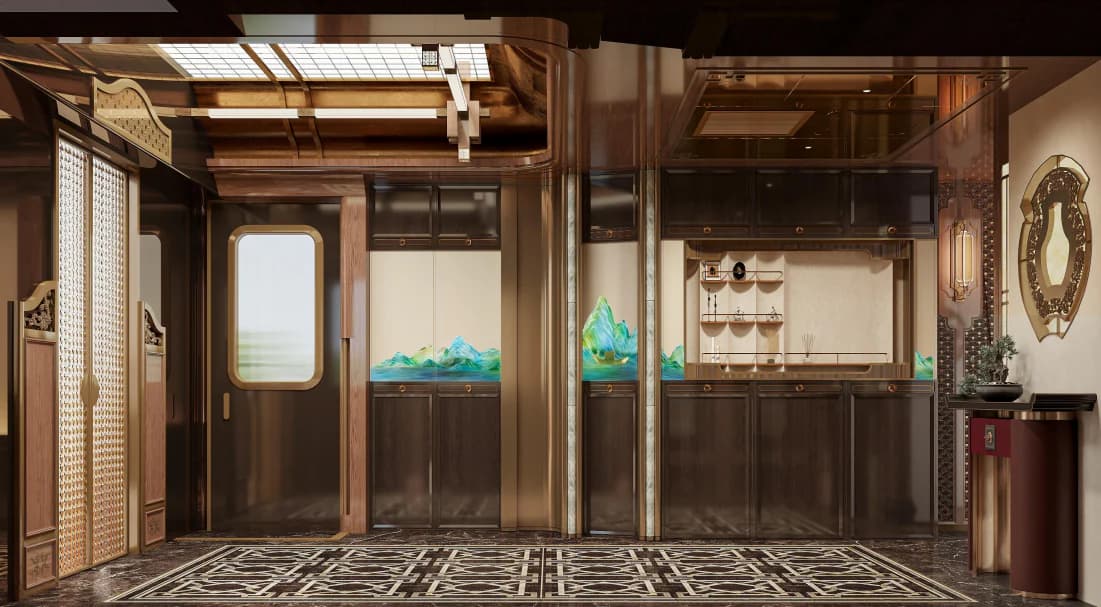
The current product page describes an 18-day Guangzhou round trip to Xinjiang and states that departures, rooms and fares require written confirmation. It also lists separate journeys with different routes and dates. This guide focuses on booking the 18-day Xinjiang product and explains how to check current facts without assuming payment, immigration or service details that have not been confirmed for you.
Choose the Exact Baiyun Express Product
Start by naming the journey you intend to book. Baiyun Express currently presents an 18-day Xinjiang round trip between Guangzhou and Guangzhou. Its published route passes through Chongqing into northern and southern Xinjiang, includes a Pamir section, and returns via Golmud and Chongqing. The booking page also shows other product lines; do not borrow their dates, route details, prices or terms for the Xinjiang journey.
The first booking note should identify the exact product as the Xinjiang Panoramic 18-Day Tour. “Baiyun Express” alone is not precise enough if the current site lists several journeys. State that you are enquiring about the 18-day Xinjiang route, then give the departure date and the edition attached to that date. Ask the contact to confirm those details in the written quote and itinerary.
The current 2027 dates on the itinerary and booking pages are:
- May 18, June 6, June 26, July 16, August 5 and August 24 — Tianshan Jinshu edition.
- September 14 — Jinfeng Huajuan edition.
A listed date is not proof of current availability. The booking page says departures require written confirmation. If you have more than one possible date, identify a first choice and alternatives, and ask the contact to state which one is currently available. Do not make non-refundable travel arrangements based only on a date appearing on a public page.
The 18-day route asks travelers to select a travel edition, one northern Xinjiang route and one Ili-to-Kuqa route. These are separate choices. Name the route section as well as the letter—for example, “North Route B” and “Ili-to-Kuqa Route A”—so an answer about one section is not mistaken for the other.
Edition also matters when a traveler chooses Ili-to-Kuqa Route B. The Tianshan Jinshu version lists Kalajun and Kurdening; the Jinfeng Huajuan version lists Tianshan Flower Sea and Nalati. The northern Route B has its own description. If you are considering Route B, include the date and edition in the enquiry and ask the contact to confirm the exact destination list in your itinerary.
Select a room category separately from the route. The current site describes Yunqi Lanyue and Yunqi Yayun as distinct categories, but it does not show your live room inventory. State your preference and party size, then ask whether that category is currently available for your date and whether it can be confirmed for your booking. A preference, a published category description and a confirmed room assignment are different things.
Keep the same selection identity throughout the booking conversation. A useful record has the product name, date and edition, North route, Ili-to-Kuqa route, room category and party size in one place. If one field changes, update the full record rather than editing a date or route in isolation. That makes it easier to compare the current quote with the itinerary that was actually discussed.
Before contacting the booking team, gather the details that define your request: the product, date, edition, both route sections, number of travelers, room preference, and any practical requirement that must be checked. You do not need to turn these into an assumption about price or availability. The purpose is to make the request specific enough for a written response to address the actual itinerary you are considering.
Prepare and Send an Enquiry the Current Way
The online booking page currently states that online submission is unavailable. As checked on November 15, 2026, it directs travelers to prepare an enquiry draft and send it to the official contact by WhatsApp or email using the details displayed on that live page. Check the page again when you are ready to contact Baiyun Express; its form status and displayed channels can change.
A prepared draft is not the same as a message sent, received, accepted or acted on. This guide does not send your enquiry. After you review the live contact details and choose to contact the provider yourself, keep a copy of the exact message and wait for a response that identifies your requested date and plan. Do not treat the presence of a contact link or a message draft as a reservation or confirmation.
The official page says to leave identity documents and payment information out of the initial enquiry. Follow that instruction. An initial route question can usually be written without attaching a passport image, bank details or card data. If someone later requests sensitive information, verify the request and the channel directly through the official booking page before deciding whether to provide it.
A concise enquiry can include the following fields:
- The exact product: Xinjiang Panoramic 18-Day Tour.
- Your preferred 2027 departure date and the edition shown for it.
- One northern route and one Ili-to-Kuqa route, each named by section and letter.
- Number of travelers and preferred Lanyue or Yayun category.
- A short list of dietary, mobility or other practical requests that need confirmation.
- Your preferred reply method and the specific questions you need answered in writing.
If you are unsure about a route, say so and ask for the current itinerary options rather than presenting a tentative selection as final. If you list a second date, say whether it is an alternative or a separate enquiry. Clear wording helps keep a reply attached to the right version of the plan, especially when different editions use the same route letter for different stops.
A helpful way to write the message is to separate statements into three parts: what you have selected, what you would prefer, and what you need the provider to confirm. The date and edition may be your selection, a room category may be your preference, and current availability may be an open question. Do not word a preference as though it were already agreed. Ask the provider to answer each open item against the same product and date.
Avoid sending a message that asks only “Is there space?” A useful response needs a date, route and room context. You can ask whether a departure and category are currently available, but availability remains unknown until the provider answers for that exact selection. If the reply mentions a date without the route edition or room, ask for the missing fields rather than inferring them.
Before sending, read the draft once as if you were the person receiving it. Can that person tell which product you mean, which date and edition you prefer, which option belongs to each route section, how many people are traveling, and what written answer you need? If not, add the missing detail in ordinary language. Keep a copy of the draft you choose to send, but do not describe it as a reservation or as accepted until the provider confirms the booking in writing.
Keep an enquiry log with the time you checked the official page, the contact channel displayed, the product and options requested, and the date of any reply. Label each item as requested, answered, confirmed in writing or still open. This record does not prove that a booking exists; it helps you see which questions the provider has and has not answered and prevents a draft from being confused with a later confirmation.
If you receive no reply, do not infer that the request was accepted or that the selected date is held. Recheck the current official contact method and follow up through the channel shown there. Ask whether your original message was received and whether the departure, route and room can be confirmed. Keep any new reply attached to the same date and product details.
Review the Written Quotation and Contract
The booking page says departures, rooms and fares require written confirmation. It also says final inclusions and exclusions follow the signed contract and confirmed itinerary. Use the written quotation to check that the offer matches your request, then read the actual contract and itinerary before paying. A public page, a verbal explanation or a prepared enquiry is not a substitute for those documents.
Start with the identity of the proposed booking. Check that the quotation names the 18-day Xinjiang product, your requested date, its edition, the selected northern and Ili-to-Kuqa routes, the room category, party size and occupancy. If a date or category has changed, request a revised written version and compare it with your original enquiry. Do not assume that a route label alone establishes the exact destinations.
Check whether the itinerary attached to the quote is the same edition you requested. Route B is not a complete identifier because the itinerary has a northern Route B and an Ili-to-Kuqa Route B, and the latter changes by edition. Ask the provider to show the named route options in the written plan. If the quote says only “Route B,” request the section and destination details before treating it as a match.
The price section should be understandable on its own. Ask the provider to show the amount for the selected date and room, explain any separate supplement that applies to your selection, state the currency, and identify what is included or excluded under the current offer. Do not assume a currency, exchange rate, supplement, payment method or service from a search result, older brochure or another traveler’s quotation. The final price and scope need to be in your own written documents.
Read each inclusion as a specific promise. The itinerary may list transport, meals, stays and highlights, but those route fields do not by themselves define the commercial inclusion list. Ask the provider to identify which services are included in the quoted fare, what is excluded, and whether any named hotel or other arrangement is only a reference. The booking page states that final inclusions and exclusions follow the signed contract and confirmed itinerary.
Payment instructions need the same care. The public booking page does not establish which card, currency, transfer method or payment schedule will be accepted for your booking. Ask the provider what payment methods and currency apply, whether the contract provides for one or more payment stages, what amounts and dates are written, and how a receipt or payment confirmation is issued. Do not assume a deposit, balance deadline, refund, cancellation or amendment policy unless the signed contract states it.
If a payment schedule is included, check that each amount and due date is explicit and tied to the same offer. If it is not included or is ambiguous, request clarification rather than using a common travel-industry pattern as a substitute. Confirm the exact amount and beneficiary from the verified booking paperwork before authorizing a payment.
Verify the seller and payment recipient before you transfer money. Compare the legal or trading name on the written quotation and contract with the beneficiary name and instructions supplied for payment. If names differ, or a new recipient is introduced in a later message, stop and verify the discrepancy through contact details independently retrieved from the live official booking page. Do not rely only on contact details contained in an unexpected payment request.
Read the change and cancellation language in the actual contract. The itinerary warns that order and alternatives can depend on railway operations, weather and local notices; that operational note does not define your refund rights or any commercial remedy. Ask what the written terms say if the departure, room, attraction or selected route changes, and request clarification before agreeing. This guide does not infer a cancellation or refund outcome.
A useful review has two passes. In the first, check that every line describes the product you asked for. In the second, check that every important statement has a written source: the quotation, confirmed itinerary, contract or final departure notice. If a detail appears only in a chat message or marketing page, ask where it is recorded in the documents that govern your booking.
Before payment, save the exact version of the quotation and contract you reviewed, along with the current itinerary version and the correspondence that explains any differences. If a revised document arrives, do not assume it is identical to an earlier copy; check the date, route choices, room, price and terms again. A saved document helps you track what was offered, but only the provider can confirm whether a booking has been accepted.
Check China Entry Rules for Your Own Itinerary
Immigration permission is personal. The current National Immigration Administration (NIA) policy page is the authoritative starting point for China’s visa-free transit rules, but a travel article cannot determine whether a particular traveler qualifies. Check the latest official policy for your nationality, passport type, ports, route, permitted area and onward ticket, and confirm any uncertainty with the Chinese embassy or consulate responsible for your case.
The NIA page checked on November 15, 2026, describes the 240-hour visa-free transit policy as allowing eligible travelers to stay for no more than 10 days in permitted areas. It specifies that the policy applies to nationals in its eligible list who are transiting to a third country or region, enter through a designated port, hold an ordinary passport and have an onward ticket with a confirmed seat and departure date. The detailed eligibility conditions matter; the policy is not a general visa waiver for every traveler.
The Baiyun Express Xinjiang product is published as an 18-day Guangzhou round trip. Eighteen days is longer than the NIA policy’s maximum 10-day stay, so the 240-hour transit policy by itself cannot cover the entire tour. This comparison does not establish whether you qualify for another visa-free arrangement or which visa you need. It means you must check the rule that applies to your full personal itinerary before booking non-refundable international travel.
Do not assume that a tour label, a train ticket or a stop in another city changes your immigration status. The NIA conditions refer to international transit, designated ports, permitted areas and onward travel. The published Baiyun Express route is product information; the official entry decision depends on the traveler and full travel documents. Ask the relevant authority how the rule applies to your entire itinerary, including any days before or after the tour.
Do not use the name “transit” as a shortcut for eligibility. The NIA page describes transit to a third country or region and sets conditions for nationality, passport, designated port, permitted area and confirmed onward travel. Whether your arrival, tour route and departure plan meet those conditions must be assessed against the current official policy. A published tour date or itinerary does not serve as immigration approval.
Check the whole China stay, not only the 18 tour days in isolation. Include any time you plan to spend in Guangzhou before boarding, any extra nights after the return, and any separate travel or transit in China. If your trip begins or ends in a country different from the one named on a ticket, or if you will leave the permitted area under a transit policy, ask the relevant official authority whether that matters to your case. Do not infer permission from a route map.
Use a simple verification sequence: confirm the current official NIA page; identify the passport and nationality you will travel with; map every entry and exit point and the exact dates; check whether the policy’s permitted areas match the plan; and verify the onward ticket requirement. If any condition is unclear, seek an answer from NIA or the Chinese embassy or consulate before making a booking decision. Keep a copy of the page and the date you checked it.
Policy pages can change between an enquiry and a 2027 departure. The NIA source used for this article is dated August 20, 2026 and was checked again on November 15, 2026. Revisit the latest official policy before buying flights and again closer to travel. Do not rely on this article’s snapshot, an older list of eligible nationalities or advice for another traveler as proof that you can enter or remain in China.
If a separate visa-free arrangement or visa appears relevant, verify its own scope and validity rather than assuming the 240-hour transit rule covers it. Conditions may depend on the passport, purpose, route, entry point, dates and total stay. The right document cannot be selected from the name of the tour alone. The booking team can confirm product details; it cannot replace an official immigration determination for your individual case.
For your own review, gather the passport nationality and type you will actually use, proposed China entry and exit dates, border ports, onward ticket details, any stop outside the listed permitted area and your full time in China. These are inputs for checking official rules, not an eligibility formula. If your ticket or route changes, repeat the check instead of assuming the earlier answer still applies.
Arrange Travel Protection and Health Planning
A multi-stop journey can raise insurance and health questions that depend on the traveler and the policy. The official itinerary describes a route through northern and southern Xinjiang and the Pamir area. That broad route description is not a medical assessment and does not establish what an insurer will cover. Review the actual plan and the current policy wording with the insurer before you decide.
Ask the insurer whether the policy applies to the complete itinerary, dates and activities you plan to take part in. Read its definitions, exclusions, pre-existing-condition terms and claim requirements. If you need cover for medical treatment, evacuation, delays, trip interruption or cancellation, check whether those situations are named and what evidence the insurer requires. Do not treat a list of possible cover types as confirmation that your policy includes them.
If you have a health condition, mobility requirement or concern about the Pamir portion, discuss your own situation with a qualified clinician before booking. Ask the booking contact for the current route details that your clinician wants to review. The guide cannot decide whether a destination is medically suitable or promise a particular level of support during the trip.
Keep practical needs in writing. If you need assistance at boarding, a specific room arrangement or a particular transfer detail, describe what you need and ask whether it can be confirmed for your date. A request is not an accepted service. Compare the written response with your own needs and do not assume that a general itinerary description promises an individual accommodation.
When comparing policies, you can ask the insurer to clarify:
- whether the stated area of cover includes every part of the itinerary;
- what exclusions apply to medical conditions or planned activities;
- how emergency assistance is contacted while traveling;
- what documentation is needed for a delay, interruption or claim;
- whether changes to the route affect cover under the policy.
Travel protection also includes knowing whom to contact if your plans change. Save the official booking contact from the live page, your insurer’s assistance details and the local contacts provided in the final departure instructions. Confirm how changes are communicated and which document controls. Do not assume an online post, older message or informal group chat supersedes the written notice for your departure.
Plan Guangzhou Connections Around Written Instructions
The booking page describes the 18-day journey as a Guangzhou round trip. It says the journey begins and ends there, with coordinated boarding and baggage handover. It also says any alternative joining arrangement should be confirmed in writing, and advises against booking connecting transport before confirmation. Those statements help overseas travelers plan, but they do not give an airport pickup time or promise a separate airport transfer.
The live page says the final written pre-departure notice governs the meeting point, time, contact and baggage handover. Use that notice when planning your arrival in Guangzhou. If the exact meeting point or reporting time is still pending, keep hotel and local transfer arrangements flexible and ask when the final instructions will be issued. Do not infer a schedule from the first day of the route alone.
When the notice arrives, check that it names the correct departure date and identifies the meeting point, reporting time, contact method and baggage handover instructions. If you have booked your own hotel or local transport, compare the location and timing with the notice. If anything conflicts, ask the booking contact to clarify the current plan rather than choosing which message to follow yourself.
If you plan to arrive by international flight, leave enough flexibility for separate travel to the confirmed Guangzhou meeting point. The appropriate buffer depends on your ticket, arrival arrangements and personal tolerance for a missed connection; the public itinerary does not specify one universal number of hours. Ask the booking contact whether the selected date has any written reporting guidance before purchasing a tight onward or same-day connection.
A pre-tour hotel, airport transfer or alternative boarding city is not established simply because Guangzhou is the start point. Ask whether each arrangement is included, available or outside the quoted package, and obtain the answer in writing. The current booking page says an alternative joining arrangement may be used only when confirmed for the selected departure. Do not create your own assumption about where the train can be joined.
Plan the return with the same caution. The published itinerary says the journey returns to Guangzhou on Day 18, but the page does not provide your exact arrival time or station platform. Wait for the final written notice before booking an onward flight, hotel or rail connection with little flexibility. If you need to leave Guangzhou shortly after the tour, explain that constraint and ask for the most current arrival information.
Keep baggage questions separate from transfer questions. The page refers to coordinated boarding and baggage handover, and says the final notice governs the handover instructions. It does not establish your personal baggage allowance or guarantee that a particular item can be carried in a vehicle or room. Ask about any unusual bag, mobility aid or medical device before departure, and rely on the response for your selected itinerary.
International Traveler Checklist Before Payment
Before paying, check the booking as a set of connected documents rather than as a page title or a message thread. The purpose is to ensure that the itinerary, quote and contract all describe the same journey and that the entry plan and Guangzhou connections are workable for you. If a key detail remains open, ask the provider or the relevant official source before making a commitment that depends on it.
- Exact product and duration stated as the 18-day Xinjiang journey.
- Departure date and edition named in the written itinerary.
- One northern route and one Ili-to-Kuqa route identified separately.
- Requested room category, party size and occupancy written clearly.
- Current availability and final itinerary confirmed in writing.
- Quote lists the amount, applicable currency, supplements and inclusion scope.
- Contract explains the payment instructions and any applicable staged payment terms.
- Seller name and payment recipient independently checked against the documents.
- Change, cancellation and refund terms read from the signed contract rather than assumed.
- NIA entry requirements checked for the actual passport, route, ports and full stay.
- Insurer’s wording checked for the traveler’s selected itinerary and needs.
- Guangzhou meeting point, reporting time, contact and baggage instructions awaited in the final notice.
The public booking page says final inclusions and exclusions follow the signed contract and confirmed itinerary. Use that contract to resolve the commercial scope. Do not fill a blank with a typical industry practice or another traveler’s booking experience. If a payment method, deadline, refund or room arrangement is not clear in the documents, ask for a written clarification before payment.
Make a short “still open” list before payment. Point each item to the source that can answer it: the booking contact for current availability and itinerary, the signed contract for commercial terms, NIA or the relevant consular authority for entry eligibility, and your insurer for cover. Update each item with the date and written reply. If an essential point remains open, do not mark it confirmed in your own notes.
A useful final test is to compare three versions side by side: your enquiry, the written quotation, and the confirmed itinerary or contract. Product, date, edition, routes, room and party details should match. If they do not, request correction or explanation and wait until the difference is resolved. Keep records of what you received, but do not describe the booking as accepted until the provider confirms it in writing.
International Booking Questions
Is the online enquiry form working now?
As checked on November 15, 2026, the official booking page said online submission was unavailable and asked travelers to prepare a draft for the WhatsApp or email contact shown there. Check the live page before enquiring because the contact method and status may change. A prepared draft is not proof that a message was delivered or accepted.
Can the 240-hour transit policy cover the 18-day tour?
No, not by itself. The NIA page describes a maximum stay of 10 days in permitted areas under the policy, while the published tour lasts 18 days. Whether another visa or exemption applies is individual. Check the current NIA policy and the Chinese embassy or consulate relevant to your passport and itinerary.
Does sending an enquiry reserve a departure or room?
The booking page says departures, rooms and fares require written confirmation. Ask for a response that names your date, edition, both route selections, room category and party size. Do not treat a draft, sent message or general reply as confirmation that inventory has been held.
What should I include in an overseas booking enquiry?
Name the 18-day Xinjiang product, your preferred date and edition, one route in each route section, your party size and room preference. Add practical requests that need an answer before booking. Use the contact method currently shown on the official booking page, and leave identity documents and payment information out of the initial enquiry.
Does the public fare page confirm my final price and inclusions?
No. The booking page says final prices require written confirmation and that final inclusions and exclusions follow the signed contract and confirmed itinerary. Ask for the quote to match your selected date, route, room and party, then review its full scope before payment.
Which payment methods or currency can I use?
The page reviewed for this guide does not establish a payment method or currency for your booking. Ask the official contact what is accepted and have the applicable currency and instructions stated in your written documents. Do not assume a card, bank transfer, deposit amount or payment schedule based on another booking.
Should I book flights before the tour is confirmed?
The booking page advises travelers not to book connecting transport before an alternative joining arrangement is confirmed in writing. More broadly, wait for the departure and final Guangzhou instructions before making tight or non-refundable connections. The decision depends on your own tickets and flexibility; the public page does not specify one universal buffer.
Where do I find the final Guangzhou meeting instructions?
The booking page says the latest written pre-departure notice governs the meeting point, time, contact and baggage handover. Ask when that notice will be issued and recheck it before traveling to Guangzhou. Do not infer the details from the date list or itinerary day count.
Do I need to send my passport or payment details with the first enquiry?
The current booking page asks travelers to leave identity documents and payment information out of the initial enquiry. Give only the information needed to describe your request. If further information is requested later, verify the channel and reason through the official page before deciding what to provide.